
Frutto del drago
Selenicereus undatus
Scritto da Emilio Marruso · ultima verifica
- Luce
- Pieno sole (6 o più ore di luce solare diretta al giorno)
- Acqua
- Annaffia quando il terreno è quasi completamente asciutto
- Resiste al freddo
- fino a −1,1 °C
- In casa
- Sì
- In vaso
- Sì
Tossica per: Persone · Perché
Panoramica
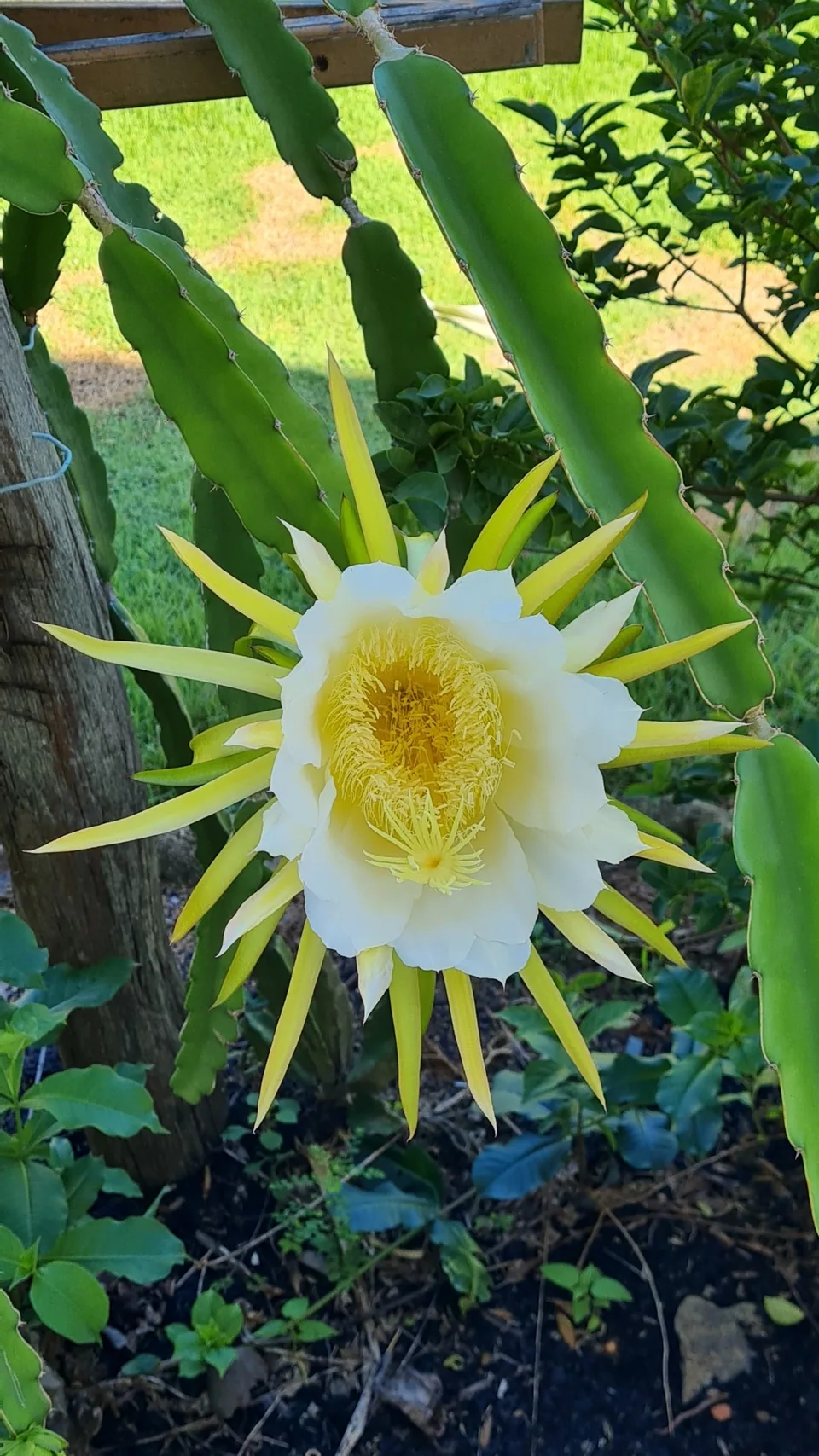
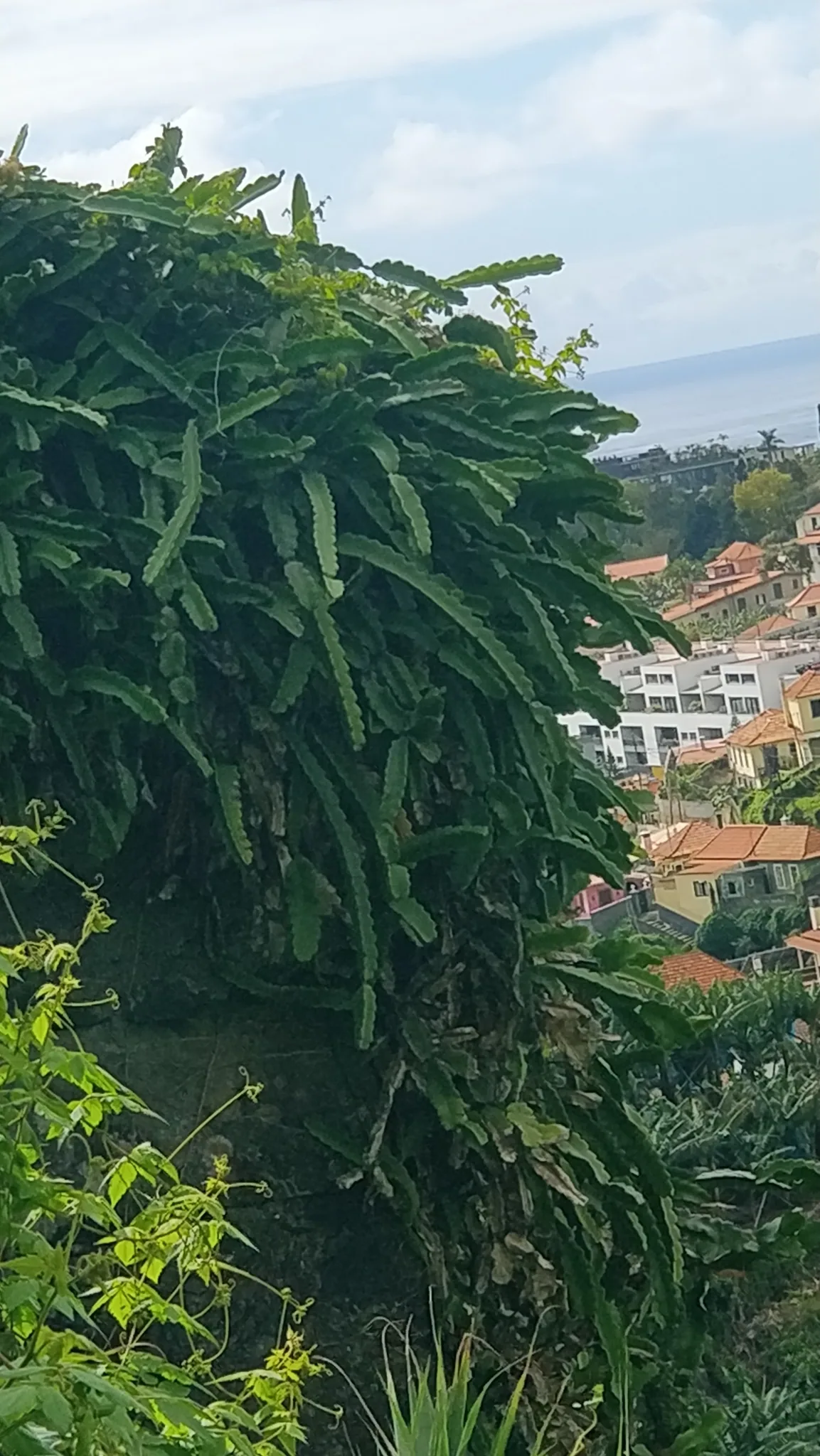
La pitaya è un cactus rampicante a fioritura notturna, coltivato soprattutto per i suoi frutti dolci e commestibili. [1] Preferisce il sole diretto e intenso, temperature calde e terreno ben drenato, e si può coltivare in vaso. [1] Kew accetta il nome e ne indica l'areale di origine dal Messico all'Honduras. [2]
Citato in inglese, come nella fonte.
Questa scheda è incompleta: le fonti lette non coprono ancora tutti i campi.
Non ancora coperto dalle nostre fonti: Messa a dimora, Distanza d'impianto
Tossicità
Riportato dalla fonte, citato alla lettera. Non è un consiglio medico o veterinario: se una persona o un animale può aver ingerito questa pianta, contatta un centro antiveleni o un veterinario.
Animali
Non tossica per gatti, cavalli e cani. [1]
Testo originale: #non-toxic for cats #non-toxic for horses #non-toxic for dogs #edible #edible fruits
Persone
Alcune persone possono essere allergiche alla pitaya, in particolare se sono allergiche ad altri frutti.
Testo originale: Some people may be allergic to dragon fruit, particularly if they have allergies to other fruits.
[1]
Calendario
Messa a dimora
Non indicato nelle fonti lette.
Raccolta
Dall'estate all'autunno
Periodo di interesse/raccolta:
Autunno
Estate
Tipo di frutto:
Bacca
Lunghezza del frutto:Testo originale: Display/Harvest Time: Fall Summer Fruit Type: Berry Fruit Length:
Mesi come li danno le fonti, per lo più degli Stati Uniti (emisfero nord). Nell'emisfero sud si spostano di circa sei mesi.
Cura
Acqua
Annaffiatura
Annaffia quando il terreno è quasi completamente asciutto
Annaffia questa pianta quando il terriccio è quasi completamente asciutto e assicura una buona circolazione dell'aria per prevenire le malattie.Testo originale: Water this plant when the soil is almost completely dry and provide good air circulation to prevent disease.
Note sull'annaffiatura
Annaffia adeguatamente in primavera e in estate fino alla fine della fioritura; in inverno riduci le annaffiature senza lasciare che la pianta si secchi del tutto
Annaffia a sufficienza in primavera e in estate, fino alla fine della fioritura. Riduci le annaffiature nei mesi invernali, ma non lasciare che la pianta si secchi completamente.Testo originale: Provide adequate watering in the spring and summer, and up until the flowering period ends. Reduce watering during the winter months, but don't allow the plant to dry out completely.
Luce
Pieno sole (6 o più ore di luce solare diretta al giorno)
Luce:
Pieno sole (6 o più ore di luce solare diretta al giorno)
Tessitura del terreno:Testo originale: Light: Full sun (6 or more hours of direct sunlight a day) Soil Texture:
Clima e freddo
Rusticità, zona più fredda
minima invernale da −1,1 a 1,7 °C
Zona:
10a, 10b, 11a, 11b
-
Frutto:Testo originale: USDA Plant Hardiness Zone: 10a, 10b, 11a, 11b - Fruit:
Rusticità, zona più calda
minima invernale da 7,2 a 10 °C
Zona:
10a, 10b, 11a, 11b
-
Frutto:Testo originale: USDA Plant Hardiness Zone: 10a, 10b, 11a, 11b - Fruit:
Dove coltivarla
In casa
Sì
Collocazione:
Vaso
Piante d'appartamento
Patio
Tipo di giardino:
Giardino resistente alla siccitàTesto originale: Landscape Location: Container Houseplants Patio Landscape Theme: Drought Tolerant Garden
In vaso
Sì
La pitaya si può coltivare in vaso, ma indossa sempre guanti protettivi quando la maneggi, per via delle spine acuminate lungo i fusti.Testo originale: Dragon fruit or pitaya can be grown in containers but be sure to wear protective gloves when handling this plant due to the sharp spines along the stems.
Distanza d'impianto
Non indicato nelle fonti lette.
Propagazione
Seme; talee di fusto
Si può propagare per seme o per talea di fusto.Testo originale: It may be propagated by seeds or stem cuttings.
Coltivazione
La pianta
Ciclo di vita
perenne
Ciclo vitale:
Perenne
Metodo di propagazione consigliato:
Seme
Talea di fustoTesto originale: Life Cycle: Perennial Recommended Propagation Strategy: Seed Stem Cutting
Famiglia
Cactaceae
Questa pianta appartiene alla famiglia delle Cactaceae ed è una succulenta epifita con fiori profumati a fioritura notturnaTesto originale: This plant is a member of the cactus family (Cactaceae) and is a succulent, epiphyte that has fragrant, night-blooming flowers
Altezza da adulta
244-610 cm
Dimensioni:
Altezza: 2,4 m. 0 cm. - 6,1 m. 0 cm.Testo originale: Dimensions: Height: 8 ft. 0 in. - 20 ft. 0 in.
Larghezza da adulta
91-305 cm
Altezza: 2,4 m. 0 cm. - 6,1 m. 0 cm.
Larghezza: 91 cm. 0 cm. - 3 m. 0 cm.Testo originale: Height: 8 ft. 0 in. - 20 ft. 0 in. Width: 3 ft. 0 in. - 10 ft. 0 in.
Parassiti e malattie
Parassiti
formiche, cocciniglie, cocciniglie cotonose (gli uccelli beccano i frutti)
Insetti, malattie e altri problemi: controlla la presenza di formiche, cocciniglie e cocciniglie farinose.Testo originale: Insects, Diseases, and Other Plant Problems: Monitor for ants, scale, and mealybugs.
Malattie
antracnosi, marciume del fusto e delle radici, macchie brune dovute a infezioni fungine o batteriche
Previeni l'antracnosi garantendo alla pianta una buona circolazione dell'aria. Le annaffiature eccessive o le piogge troppo abbondanti possono causare marciume del fusto e delle radici. Macchie brune possono comparire in seguito a infezioni fungine o batteriche.Testo originale: Avoid anthracnose by providing the plant good air circulation. Overwatering or too much rainfall can lead to stem and root rot. Brown spots can develop from fungal or bacterial infections.
Problemi
Marciume del fusto e delle radici
Sintomo: Annaffiature eccessive o piogge troppo abbondanti possono causare marciume del fusto e delle radici.
Cosa fare: Annaffia solo quando il terreno è quasi completamente asciutto e assicura una buona circolazione dell'aria.
Annaffiature eccessive o troppa pioggia possono causare marciume del fusto e delle radici.
Testo originale: Overwatering or too much rainfall can lead to stem and root rot.
— Selenicereus undatus (Belle-Of-The-Night, Cinderella Plant, Dragon Fruit, Dragon Fruit Tree, Honolulu Queen, Moonlight Cactus, Nightblooming Cactus, Night Blooming Cereus, Pitahya Plant, Pitaya, Queen of the Night, Red Pitaya, Strawberry-Pear, White-fleshed Pitahaya) | North Carolina Extension Gardener Plant Toolbox [1] Annaffia questa pianta quando il terriccio è quasi completamente asciutto e assicura una buona circolazione dell'aria per prevenire le malattie.
Testo originale: Water this plant when the soil is almost completely dry and provide good air circulation to prevent disease.
— Selenicereus undatus (Belle-Of-The-Night, Cinderella Plant, Dragon Fruit, Dragon Fruit Tree, Honolulu Queen, Moonlight Cactus, Nightblooming Cactus, Night Blooming Cereus, Pitahya Plant, Pitaya, Queen of the Night, Red Pitaya, Strawberry-Pear, White-fleshed Pitahaya) | North Carolina Extension Gardener Plant Toolbox [1] Scottature solari
Sintomo: Un'esposizione eccessiva al sole può causare scottature e disidratazione.
Troppo sole può causare scottature e disidratazione.
Testo originale: Too much sun can lead to sun-scorch and dehydration.
— Selenicereus undatus (Belle-Of-The-Night, Cinderella Plant, Dragon Fruit, Dragon Fruit Tree, Honolulu Queen, Moonlight Cactus, Nightblooming Cactus, Night Blooming Cereus, Pitahya Plant, Pitaya, Queen of the Night, Red Pitaya, Strawberry-Pear, White-fleshed Pitahaya) | North Carolina Extension Gardener Plant Toolbox [1] Formiche, cocciniglie e cocciniglie cotonose
Sintomo: Controlla la presenza di formiche, cocciniglie e cocciniglie cotonose.
Insetti, malattie e altri problemi: controlla la presenza di formiche, cocciniglie e cocciniglie farinose.
Testo originale: Insects, Diseases, and Other Plant Problems: Monitor for ants, scale, and mealybugs.
— Selenicereus undatus (Belle-Of-The-Night, Cinderella Plant, Dragon Fruit, Dragon Fruit Tree, Honolulu Queen, Moonlight Cactus, Nightblooming Cactus, Night Blooming Cereus, Pitahya Plant, Pitaya, Queen of the Night, Red Pitaya, Strawberry-Pear, White-fleshed Pitahaya) | North Carolina Extension Gardener Plant Toolbox [1]
Rimedi
Le fonti consultate non danno rimedi per questa pianta.
Commestibilità
Riportato dalla fonte, citato alla lettera. Non mangiare una pianta basandoti solo su questa pagina: gli errori di identificazione possono essere pericolosi.
I frutti sono commestibili e hanno un sapore dolce; si possono consumare freschi, trasformare in marmellate o aggiungere a frullati e dessert.
Testo originale: The fruits are edible and have a sweet taste, and they can be eaten fresh, used to make jams, or added to smoothies and desserts.
[1]Oltre ai frutti, anche i fiori sono commestibili. Si usano per preparare tisane.
Testo originale: In addition to the fruits, the flowers are also edible. They are used for brewing tea.
[1]
Fonti
Ogni valore qui sopra è citato da questi documenti. I link portano all'editore originale.
- Selenicereus undatus (Belle-Of-The-Night, Cinderella Plant, Dragon Fruit, Dragon Fruit Tree, Honolulu Queen, Moonlight Cactus, Nightblooming Cactus, Night Blooming Cereus, Pitahya Plant, Pitaya, Queen of the Night, Red Pitaya, Strawberry-Pear, White-fleshed Pitahaya) | North Carolina Extension Gardener Plant Toolbox · plants.ces.ncsu.edu, consultata il
- Selenicereus undatus (Haw.) D.R.Hunt | Plants of the World Online | Kew Science · powo.science.kew.org, consultata il
Scritto da Emilio Marruso · ultima verifica